When this was a Farm
What was it like in Subtopia and Alby in the 1940s and 1950s? We know that! Margareta Borg grew up in what is now Subtopia and has shared her childhood photographs and stories.
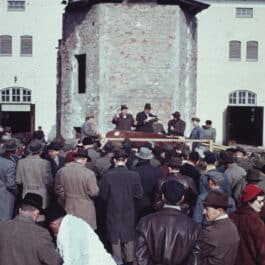
One morning at the beginning of the year, the Subtopia switchboard rings. To our delight, it turns out that the woman on the phone has a historical treasure in her possession, which she wants to share with us. Margareta Borg grew up in Subtopia between 1945 and 1959, when the entire area was still a farm. Her father, Gunnar Öhrfeldt, leased the farm from Botkyrka Municipality and ran a large farm with dairy cows, fattening calves, piglets and fields that stretched across the area where there are now terraced houses and high-rise buildings. (Move the mouse pointer over the lower part of the image to see descriptive text).


Durable Housing
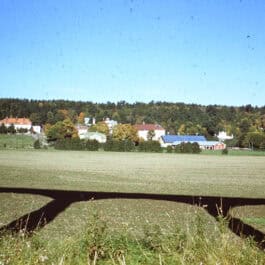
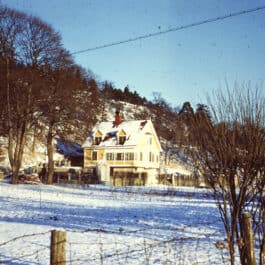
Subtopia’s main building was built by LM Ericsson and his wife Hilda as one of the most modern barns of the turn of the last century. Margareta has provided us with photographs and stories from the last years when the area was still an animal farm. She moved here as a child and lived in the tenant’s house until she was sixteen, together with her father, mother and older sister. The house is located directly on the right when you turn onto Rotemannavägen. Today, the house is not part of Subtopia’s operations, but many other buildings from the photographs are still in use!


Haylofts and Bulls
Most of Subtopia’s main building was a barn – from the hayloft at the top, where children were not allowed to play, to the cows lined up in what is now the restaurant and the bulls in what is now our expedition. They were named Hamra-Hero and Boxholm-Hero, named after their original farms, and according to Margareta, they were not very friendly.


The Last Cattle Farmer
Agriculture flourished across large parts of Alby. Gunnar Öhrfeldt invested in the most modern agricultural machinery, including one of the first motorized combines, although the farm still had four workhorses. A mighty aqueduct stretched across the fields, ending in what looked like a Roman arena. But it neither contained water nor offered games for the people – it was used to drain latrines to a round manure cistern. When Margareta lived here, however, it had long since fallen into disuse, and had even become a stage for a theatre performance. In 1933, the musical Ett gamallt klosterspel was staged in the cistern, with ticket prices of 1 krona for adults and 50 öre for children. Gunnar Öhrfeldt became the last livestock farmer on the farm. Botkyrka Municipality considered that the lease did not provide sufficient income and did not extend the contract. All the animals were auctioned off, and Gunnar instead bought the farm Stora Eneby, which his daughter Margareta eventually took over.